Choosing an electric shaver partner is not simply a matter of comparing prices and catalogue models. A suitable supplier must be able to translate your target user, shaving scenario, market requirements, and brand positioning into a product specification that can be tested and controlled.
The most reliable selection process starts by deciding whether your product needs a rotary or foil shaving system. From there, evaluate the cutting structure, motor behavior, battery performance, wet-and-dry requirements, skin comfort, quality controls, and product-line potential. Most importantly, ask for evidence behind every claim.
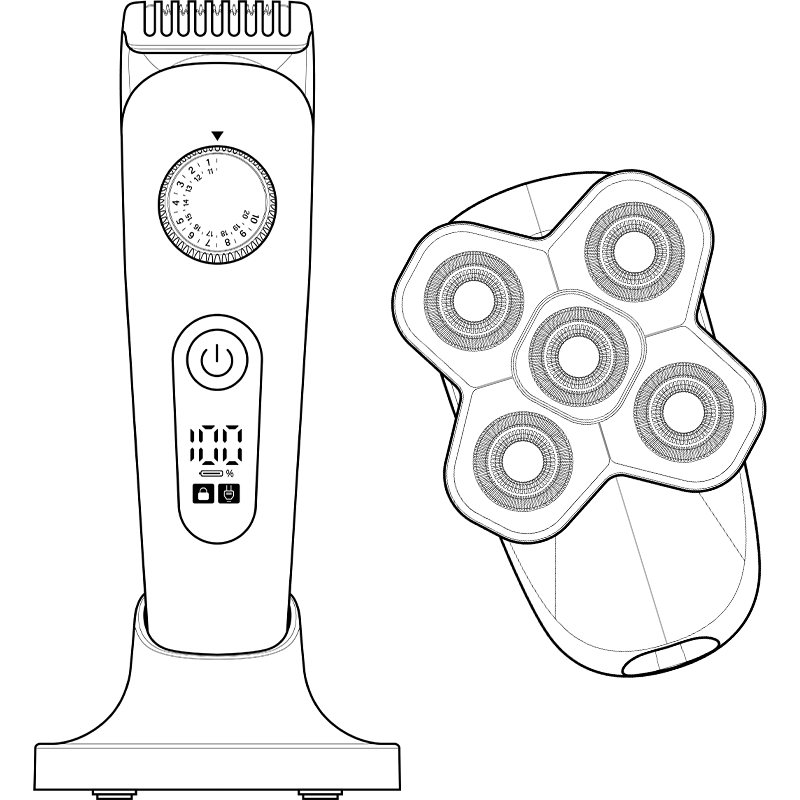
Rotary and foil shavers serve different product concepts. Neither system is automatically better; suitability depends on the target user, shaving habits, facial contours, hair characteristics, desired finish, cleaning preferences, and market positioning.
| Shaving system | Product-development focus | What the buyer should verify |
| Rotary shaver | Head movement, contour adaptation, hair entry, cutting interaction, cleaning access | How the head system follows facial contours, how hair enters the cutting system, and how repeatable the shaving result is |
| Foil shaver | Foil geometry, cutter interaction, floating travel, contact stability, precision | How the foil and inner cutter work together, how the system responds to pressure, and how wear affects performance |
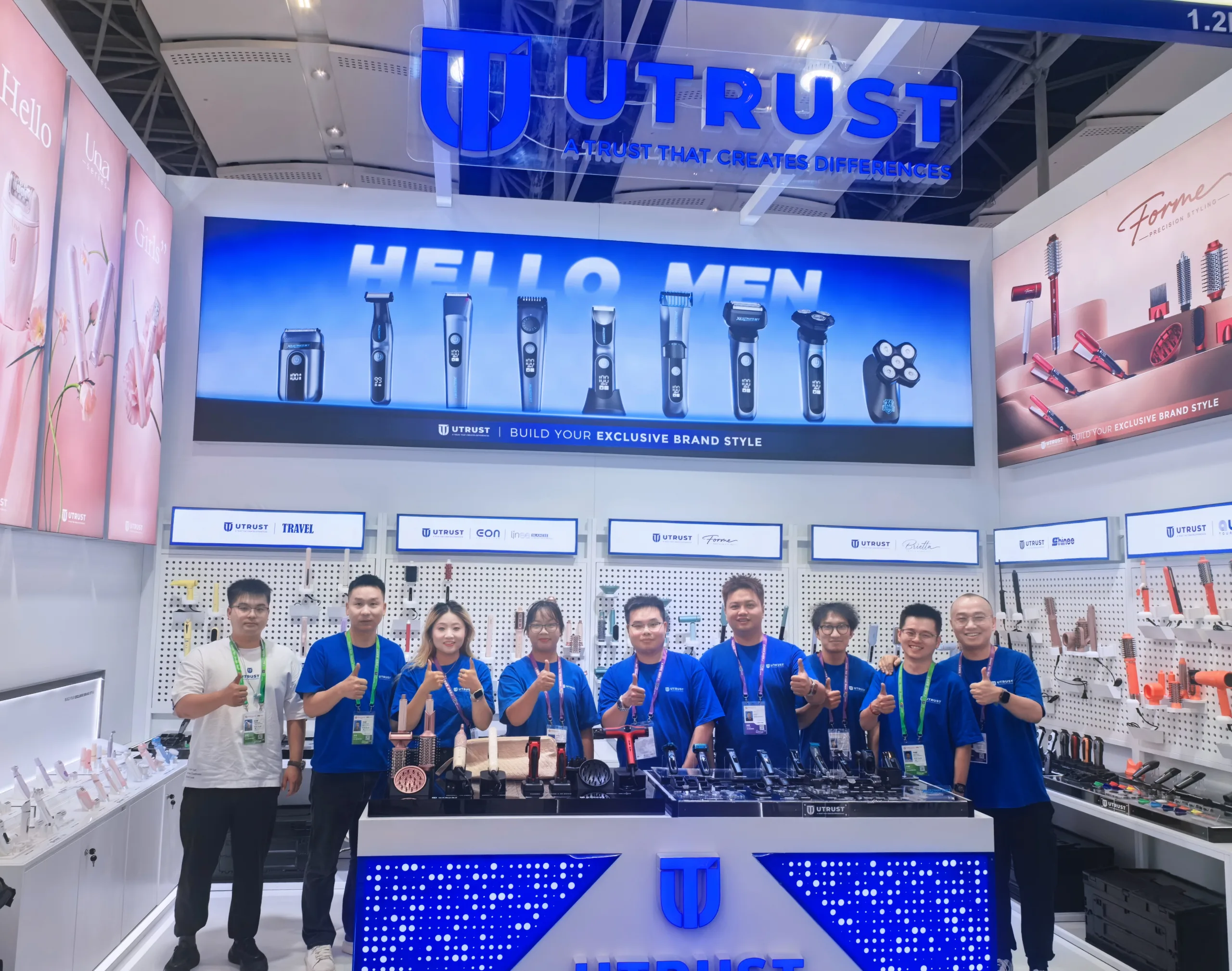
When comparing electric shaver manufacturers, ask which shaving systems they can actually develop and control—not merely which finished models appear in their catalogue. UTRUST can support both rotary and foil electric shaver development directions. Project-specific structures, specifications, and validation requirements should be confirmed during product definition.
The visible shaving head is only one part of the user experience. Foils, cutters, rotary heads, retaining parts, floating mechanisms, and the housing must function together.
Instead of asking whether a supplier uses a “high-quality blade,” ask for evidence covering:
Avoid approving a system based only on a new sample. Ask how performance is checked after repeated use and whether replacement parts maintain the approved fit and interaction. If exact materials, tolerances, or service-life claims are important, include them in a controlled specification and validation plan.
“Powerful,” “quiet,” and “long runtime” are marketing descriptions, not acceptance criteria. The useful question is how each characteristic is measured under defined conditions.
Ask potential electric shaver suppliers to explain:
A numerical result without a method, unit, tolerance, and sample condition is difficult to compare. Build a common test brief and require shortlisted suppliers to respond to the same conditions. This creates a fairer comparison than collecting unrelated figures from different catalogues.
“Wet and dry” may refer to different user behaviors: dry shaving, use with foam or gel, rinsing the shaving head, washing the complete appliance, or use in a wet environment. These are not interchangeable.
Before requesting a waterproof design, define:
Do not assign an ingress-protection claim without confirming that the product design, test method, documentation, and target-market requirements support it. The safest approach is to begin with the intended use scenario and let that drive the engineering and compliance plan.
A shaver must do more than remove hair. The user also experiences pressure, pulling, pinching, friction, heat, repeated passes, and contact around curved areas.
Ask the manufacturer how it translates these concerns into product validation. A project-specific plan may consider:
Do not invent a universal comfort score. Agree on the user group, test conditions, observation method, and acceptance logic before samples are evaluated. Safety and comfort findings should feed back into the cutting system, housing, motor behavior, and instructions—not remain isolated marketing feedback.
An attractive sample does not prove that production batches will remain consistent. Ask each candidate to show how the approved design is transferred into repeatable manufacturing.
Review the controls for:
Where confidentiality allows, request anonymized examples of inspection records and corrective-action workflows. The purpose is to see whether problems are detected, contained, analyzed, and prevented from recurring—not simply whether a quality manual exists.
Compliance depends on the final configuration and destination market. IEC 60335-2-8:2022 addresses the safety of electric shavers, hair clippers, and similar appliances for household and similar purposes. In the European Union, the RoHS Directive restricts certain hazardous substances in electrical and electronic equipment.
These references do not mean that one report or certificate covers every model, configuration, or market. Ask the supplier to map each target market to the applicable standards, test reports, technical documentation, labeling, instructions, battery-related obligations, and responsible economic operators. Have qualified compliance professionals verify the current requirements before market launch.
Check that every document matches the legal entity, factory or applicant, product model, critical components, issuing body, scope, and validity period. A logo on a brochure is not sufficient evidence.
Color and logo changes are only the surface of customization. A serious project may also involve exterior design, shaving-system selection, controls, charging experience, accessories, cleaning solution, packaging, instructions, and channel differentiation.
Before asking for a quotation, define which elements are fixed and which may change. Then clarify:
A coherent matrix might cover different shaving systems, positioning levels, channels, or user scenarios. It should not be created by adding unrelated catalogue models under one logo.
The best long-term partner is not necessarily the company with the lowest initial quotation or the largest catalogue. Evaluate whether the supplier can support decisions across development, quality, compliance, packaging, delivery, and future updates.
Score shortlisted candidates on:
Apply the same scorecard to every candidate and record unresolved risks. A higher unit quotation may represent better value if it comes with clearer control, stronger evidence, and fewer hidden responsibilities.
Choose an electric shaver partner by verifying systems and processes, not by relying on product photos or broad claims. Begin with the target user and shaving system, define measurable requirements, examine quality and compliance evidence, and test whether the supplier can support a coherent product line over time.
This approach makes quotations easier to compare and reduces the risk of approving a good-looking sample that cannot be reproduced reliably in mass production.
Choose according to the target user, shaving habits, desired result, facial-contour interaction, cleaning expectations, positioning, and channel. Define and test the intended experience rather than treating either system as universally superior.
Request company and production-site information, relevant test reports, product specifications, quality records, change-control procedures, compliance documents, packaging approvals, and commercial terms. Verify that every document applies to the exact model and market.
Provide all shortlisted suppliers with the same test conditions and require the method, equipment, units, tolerances, sample conditions, and pass/fail criteria. Numbers collected under different conditions are not directly comparable.
No. The permitted use depends on the validated design, instructions, charging condition, claimed protection, and applicable market requirements. Define the intended use and cleaning scenario before approving a claim.
Look for transparent responsibilities, repeatable quality control, disciplined change management, relevant system capability, market-specific compliance planning, clear communication, and the ability to support a connected rotary-and-foil product roadmap.