Choosing a hair clipper partner is not only about comparing quotations. The right partner must understand your target user, translate requirements into a controllable product specification, provide evidence behind quality claims, and support future product-line development.
Before making a decision, determine whether you need a direct manufacturer, a trading supplier, or a partner that can coordinate both product development and supply-chain execution. Then verify what the company actually controls rather than relying on labels alone.
Direct hair clipper manufacturers and trading suppliers can both be useful, but they may create value in different ways.
| Partner type | Potential strengths | What the buyer should verify |
| Direct manufacturer | Closer access to engineering, production, quality records, and process changes | Which processes are completed in-house, what is outsourced, and who approves changes |
| Trading supplier | Broader product access, supplier coordination, flexible category sourcing, and export support | Which factory makes the product, how quality is controlled, and who owns corrective actions |
| Development-focused partner | Coordination across product definition, engineering, sourcing, packaging, and delivery | The real scope of responsibility, named project owners, stage deliverables, and approval gates |
A company name or website description does not prove manufacturing control. Ask for a transparent process map: where tooling, assembly, testing, packaging, and final inspection take place; which steps are subcontracted; and who is accountable if requirements change.
Even if your search begins with a phrase such as “supplier hair clipper,” the better question is: which organization controls the decisions that affect my product?
When evaluating a China hair clipper supplier, begin with document review, then verify the claims through a live or on-site audit when appropriate.
A practical audit should cover:
Do not treat a certificate, factory video, or sample room as complete proof. Check the document’s issuing body, scope, site address, validity, and relevance to the product being purchased. amfori BSCI provides a framework for identifying and managing social risks in supply chains, while the OECD Due Diligence Guidance offers broader principles for responsible business conduct.
A home clipper and a professional-use clipper should not be differentiated by appearance or marketing language alone. Their intended users and operating conditions may lead to different requirements for handling, repeated use, cutting tasks, cleaning, thermal behavior, noise, maintenance, accessories, and service expectations.
Before requesting samples, define:
Avoid using “professional” or “salon-grade” as an unmeasured specification. Convert each positioning claim into acceptance criteria that can be tested and approved.
Motor power, torque, blade performance, and low noise are common sales claims. They become useful only when the supplier explains how they are measured.
For each critical characteristic, ask for:
Blade evaluation should reflect the intended cutting task and user experience. Motor and torque evaluation should relate to the defined workload. Noise results should state the measurement conditions because distance, environment, operating mode, and test setup can affect the result.
Do not accept an impressive number without its method, unit, tolerance, and pass/fail rule. A credible partner should help turn product expectations into verifiable requirements.
A good sample proves that one sample can be made. It does not prove that later production batches will remain consistent.
Ask potential partners how they control:
When comparing hair clipper manufacturers, request anonymized examples of inspection records or corrective-action workflows where confidentiality permits. The goal is not to collect paperwork; it is to understand whether deviations are detected, contained, investigated, and prevented from recurring.
Compliance requirements depend on the product configuration and destination market. Hair clippers and similar appliances are covered by IEC 60335-2-8:2022, which addresses their safety in household and similar uses. Market-specific obligations may also apply. For example, the EU RoHS Directive restricts certain hazardous substances in electrical and electronic equipment.
Ask the supplier to map each target market to the applicable standards, testing, documentation, marking, instructions, and responsible economic operators. Verify the current requirements with qualified compliance professionals rather than assuming that one report covers every model or market.
Packaging should also be reviewed before production approval. Confirm the final product configuration, included items, artwork ownership, languages, required markings, packaging tests, carton specification, and approval responsibility. MOQ and lead time should be quoted against the approved customization scope—not treated as universal figures.
The lowest-risk long-term partner is not necessarily the supplier with the largest catalogue or lowest initial price. Look for a team that can explain how today’s clipper fits into tomorrow’s grooming range.
Discuss:
A product-line roadmap can reduce disconnected launches and help a brand build recognition over time. It also reveals whether the partner thinks beyond completing the next purchase order.
Score each candidate on evidence, not promises. Recommended categories include company transparency, development capability, testing discipline, quality consistency, compliance planning, packaging readiness, delivery control, communication, and product-line fit.
Require the same evidence from every shortlisted partner and record any unanswered risks. A slightly higher quotation may be justified if it comes with stronger process control, clearer responsibility, and better support for future products.
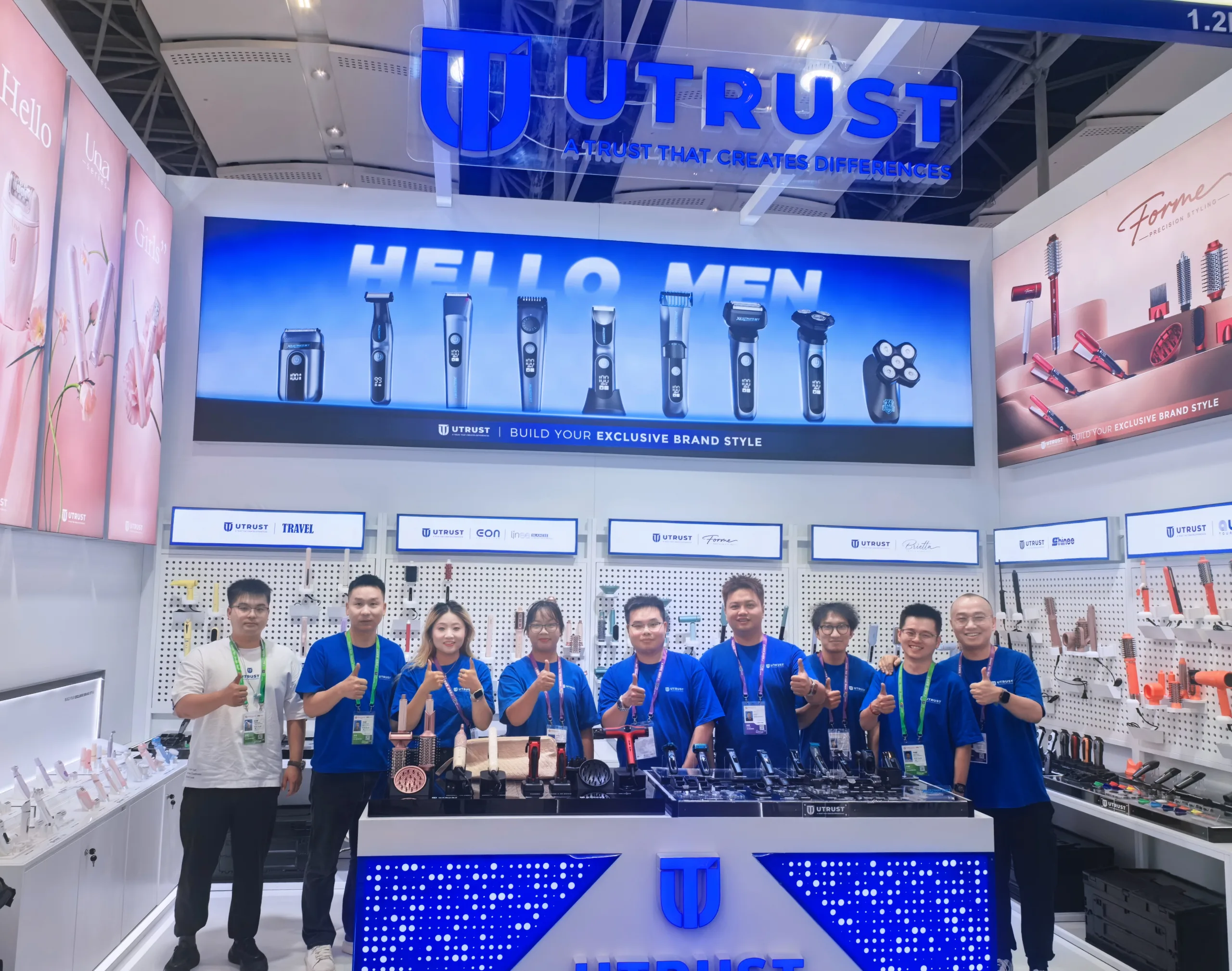
UTRUST focuses on brand-centric product-line solutions for hair care electrical appliances. Project-specific manufacturing arrangements, testing, compliance, MOQ, timing, and delivery responsibilities should be confirmed during supplier qualification. To discuss your target users, market, channel, and product plan, contact info@cn-utrust.com.
No. A direct manufacturer may offer closer production access, while a trading supplier may add sourcing and coordination value. Choose according to the responsibilities and controls your project requires, then verify who actually performs and approves each critical step.
Compare the legal entity, site address, audit records, production process, staff responsibilities, and shipment documents. A live or on-site audit can help confirm the relationship between the sales company and production location.
Create a project-specific validation plan covering the intended cutting tasks, handling, blade and motor behavior, noise, temperature, charging, cleaning, safety, packaging, and other market requirements. Define the method and acceptance criteria before testing.
Normalize the product specification, customization scope, packaging, testing, compliance responsibilities, commercial terms, and included services. Prices are not comparable when the underlying scopes differ.
Look for transparent responsibilities, disciplined change control, traceable quality records, market-specific compliance planning, clear communication, and the ability to support a coherent product roadmap rather than only one SKU.