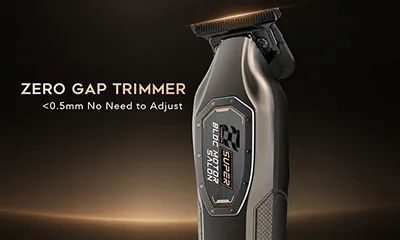
A T-blade trimmer is a compact finishing tool with a recognizable T-shaped cutting head, commonly used for outlining, edging and detailed work. For brands, successful development must align the cutting system, ergonomics, power, cleaning and safety requirements with a defined user scenario.
A T-blade format helps users see and position a broad cutting edge around hairlines, ears, necklines, beards and moustaches. Barbers may use it to refine fades, create sharp outlines and remove short stray hairs. These tasks make control, visibility and maneuverability especially important.
The format does not define a universal tooth pitch, material, cutting length or blade gap. Those details vary by design. A professional T-blade trimmer should therefore be defined by its intended workload and supporting evidence—not by the blade silhouette alone.
Within a product range, it usually works best as a precision finisher beside a hair clipper or shaver. A cordless T-blade trimmer can improve movement around a client or mirror, but battery condition, charging workflow and performance across the usable charge range still require validation. Brands can compare possible positioning with the hair finishing trimmer category.
The T profile can improve access around contours and provide a clear sightline for detailed work. A compact body may also support grip changes and controlled wrist movement. These benefits depend on the complete system: blade geometry, alignment, friction, drive stability, housing stiffness and assembly consistency all influence the result.
Product teams should not optimize closeness in isolation. More blade exposure may improve access but can also increase sensitivity to pressure, angle, damage or tolerance variation. A smaller housing supports maneuverability but leaves less space for the battery, heat management and acoustic control.
An OEM brief should define:
Request evidence for cutting consistency, blade alignment, temperature, vibration, sound, guard retention, charging behavior, durability and cleaning recovery. Test methods should identify the sample condition, operating cycle and pass/fail limit. Production approval should also include controlled drawings, bill-of-materials status, appearance standards and change-control rules.
Is every T-blade trimmer suitable for professional use?
No. Professional positioning should be supported by evidence for repeated use, cutting consistency, temperature, durability and cleaning.
Does cordless mean lower performance?
Not automatically. Performance depends on the complete battery, drive, control and blade system.
What should a brand prepare for an OEM quotation?
Define the user, cutting tasks, market, operating mode, accessories, design direction and acceptance criteria. Then review the UTRUST OEM process.
A T-blade trimmer should be developed as an integrated precision tool, not simply a wide blade on a compact body. To discuss an OEM project brief, contact info@cn-utrust.com.