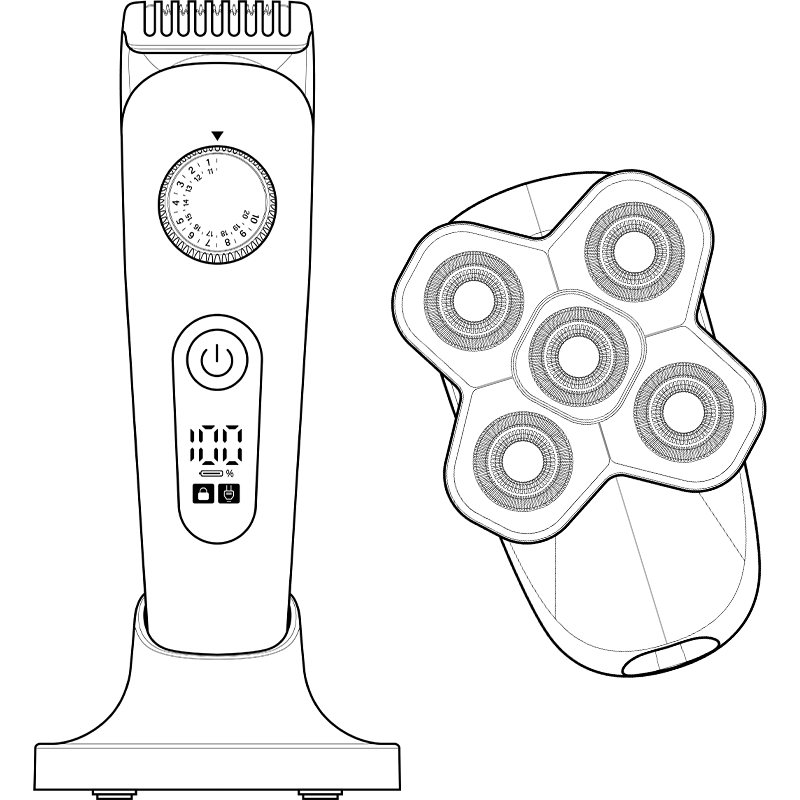
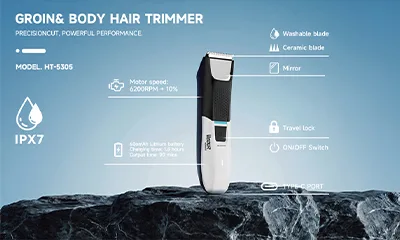
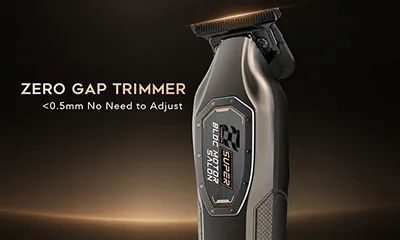
A clipper is generally positioned for bulk hair removal and broader cutting tasks. A trimmer is generally positioned for precision work, contouring and shorter-detail areas. These roles may overlap, but they should not be treated as interchangeable without testing the intended cutting system, accessories and user scenarios.
This guide explains how brand owners can define the two categories, decide whether both belong in the same product line, and ask manufacturers for evidence before approving a design.
The clearest way to separate a clipper from a trimmer is by its primary job. A hair clipper is normally expected to process larger sections of head hair efficiently and maintain a selected cutting length with guide combs. A trimmer is normally expected to work around edges, contours, sideburns, necklines and facial-hair details where control matters more than broad coverage.
This is a product-planning distinction rather than a universal engineering rule. Actual performance depends on the blade system, tooth geometry, motor-load behavior, accessories and safety design of a specific model. A narrow device should not automatically be called a trimmer, and a wide cutting head alone does not prove that a product can handle professional clipper workloads.
Before requesting quotations, create a one-sentence role statement for each planned SKU. For example, one product may be defined as the main head-hair cutting tool, while another supports finishing and beard detailing. This prevents two visually different devices from serving the same purpose and competing with each other inside the range.
| Planning question | Hair clipper direction | Hair trimmer direction |
| Primary task | Broader hair cutting and length reduction | Contouring, edging and detail work |
| Typical working area | Larger sections of head hair | Hairline, neckline, sideburns and facial hair |
| Portfolio role | Core cutting product | Precision companion product |
| Buyer expectation | Efficient, controlled bulk cutting | Maneuverability and accurate detailing |
The visible difference between a hair clipper and a hair trimmer often begins with the cutting head. Clippers commonly use a broader working area to cover larger sections of hair, while trimmers commonly favor a more compact cutting area for control around smaller zones. However, a brand should never approve a product based on appearance alone.
Ask the manufacturer to explain how the proposed blade and guard system supports the target task. The evaluation should cover usable cutting range, guide-comb stability, adjustment method, blade alignment, skin-contact behavior and the consistency of replaceable parts. If dimensions or tolerances are important, they should appear in an approved specification rather than remain as verbal promises.
Accessories also shape category perception. A clipper line may depend on an organized guard system for repeatable lengths, while a trimmer may need attachments that support outlining or beard maintenance. The correct configuration depends on the intended market and SKU role; there is no universal accessory count that proves product quality.
During sampling, test the complete system—not only the bare device. A strong body design cannot compensate for unstable guards, unclear length markings or attachments that are difficult to install and clean.
A useful portfolio begins with situations, not specifications. Head-hair cutting, contour finishing and beard care place different demands on the user experience, even when one device claims to perform all three.
For haircutting, consider how the product moves through larger sections of hair, maintains a selected length and handles changes in hair density. For contouring, evaluate visibility around the cutting edge, maneuverability near curves and the control required for clean lines. For beard care, consider facial-area access, short-length management, comfort around sensitive zones and the practicality of cleaning after use.
Professional and household scenarios may also change the brief. A tool designed for repeated salon use may face different duty cycles, handling patterns and maintenance expectations from one intended for occasional home grooming. These differences should be written into the product definition before motor, battery or blade options are selected.
Do not assume that one “all-in-one” device automatically creates the strongest proposition. Combining functions can simplify the range, but it can also weaken role clarity. Ask target users to complete realistic tasks with samples and record where the product feels efficient, precise or compromised.
Many brands benefit from carrying both categories when each product has a distinct job and a clear reason to exist. A clipper can anchor the haircutting offer, while a trimmer can extend the range into finishing, contouring and beard-detail applications. Together they can create a more complete grooming journey and provide natural opportunities for kits, bundles and future upgrades.
That does not mean every brand should launch both at once. A focused range may be more appropriate when the audience is narrow, the channel requires a simple proposition, or the business does not yet have enough evidence to support two clearly differentiated products. Launching two near-identical devices can divide reviews, inventory and marketing investment without giving the buyer a meaningful choice.
Use three tests before approving both SKUs:
Product-line planning becomes more valuable when the clipper and trimmer share a recognizable system without becoming functionally identical. A family may use related visual proportions, color logic, surface treatment, packaging hierarchy and interface principles. The products should look connected, but their category roles must remain obvious.
Start by defining the hero product. For a haircut-led range, the hair clipper may be the core device, with a trimmer positioned as the precision companion. For a beard-led or detail-led range, the hair and beard trimmer may take the lead while the clipper opens a broader haircutting use case.
Then plan shared and unique elements. Shared charging logic or packaging architecture may improve consistency, while different cutting systems and attachments preserve functional differentiation. Every proposed common part should still be evaluated for safety, performance and target-market requirements; visual consistency should not force unsuitable technical compromises.
Finally, map future extensions before finalizing the first launch. Replacement parts, accessory kits, finishing tools or shaver products may influence interface and packaging decisions. A roadmap reduces the risk of creating a first SKU that cannot support a coherent second generation.
Marketing terms such as “powerful,” “quiet” or “skin friendly” are not adequate product-development criteria. A brand should translate each promise into a measurable requirement and agree with the manufacturer on the test method, sample state and acceptance rule.
For performance, the discussion may include cutting behavior under relevant hair conditions, motor response under load, noise, vibration, runtime, charging behavior and temperature during intended use. The exact targets must be defined for the project; this article does not prescribe universal values. For safety and comfort, brands should examine blade alignment, skin-contact areas, snagging or pulling risk, accessible hot surfaces, attachment security and foreseeable misuse.
Evidence should be reviewed at more than one stage. A prototype can demonstrate design intent, but it does not prove that later production batches will behave identically. Ask how the supplier will connect approved samples, engineering specifications, incoming inspection, in-process checks and final-product verification.
A hair clipper is generally positioned for broader head-hair cutting and controlled length reduction, while a hair trimmer is generally positioned for edging, contouring and detail work. The real distinction should be verified through the specific blade system, accessories and intended use—not the product name alone.
A multipurpose product may cover both tasks, but the brand should test whether it performs each task well enough for the target user. Broader coverage and fine-detail control can create competing design priorities, so a combined claim requires evidence from realistic use scenarios.
Only when the two SKUs have clear roles, differentiated use cases and a coherent commercial plan. A smaller brand may benefit from launching one hero product first, then adding a companion device after learning from channel feedback and user behavior.
Testing should follow the approved product brief and may include cutting performance, guard stability, motor behavior under relevant load, noise, vibration, runtime, charging, temperature, skin contact, snagging risk, cleaning and attachment security. Exact methods and limits must be confirmed for the individual project.
The most important lesson in the hair trimmer vs clipper decision is that category names should follow product purpose. Define the user, task, working area and portfolio role first. Then ask the manufacturer to show how the cutting system, accessories, performance validation and quality controls support that definition.
A strong men’s grooming range does not need the largest possible SKU count. It needs products that work together, serve different jobs and leave room for future development. Documenting those roles early also gives design, engineering, packaging and sales teams one shared reference when they review samples or propose changes.
Before committing to tooling or a final assortment, compare both concepts in realistic user tasks and record the acceptance criteria for each one. This turns the portfolio decision into a repeatable development process rather than a choice based mainly on appearance or catalog descriptions.
If your brand is planning a clipper-and-trimmer product line, contact info@cn-utrust.com to discuss the project brief and the evidence required before development begins.